

1. What Is Japanese Chicken Curry?
Japanese Chicken Curry (チキンカレー), known as Chicken Kare Raisu, is a popular Japanese comfort food made with tender chicken, potatoes, carrots, and onions simmered in a thick, mildly spiced curry sauce.
Unlike many Indian and Thai curries, Japanese curry is generally thicker, smoother, and slightly sweeter. It is commonly served over steamed Japanese rice, creating a hearty meal enjoyed by families throughout Japan.
The dish is especially popular in homes, school cafeterias, restaurants, and casual dining establishments.
Its appeal comes from a beautiful combination of tender chicken, soft vegetables, and a rich sauce with a gentle blend of spices.
One bowl of Japanese chicken curry offers warmth, comfort, and the delicious taste of everyday Japanese cooking.
2. The History of Japanese Curry
Japanese curry has an interesting history influenced by international food culture.
Curry was introduced to Japan through British influences during the Meiji period (1868–1912). British-style curry itself had developed from Indian culinary traditions.
Over time, Japanese cooks adapted the dish to local preferences by creating a thicker sauce, incorporating familiar vegetables, and serving it with rice.
During the twentieth century, curry became increasingly popular in Japanese households, particularly after the introduction of convenient curry powders and solid curry roux blocks.
Today, Japanese curry is one of the country’s best-loved home-cooked meals.
Chicken curry is a popular variation alongside beef and pork curry.
3. What Makes Japanese Chicken Curry Different?
Japanese curry has a distinctive taste and consistency that separates it from other curry styles.
| Feature | Japanese Chicken Curry | Indian Chicken Curry |
|---|---|---|
| Texture | Thick and smooth | Often thinner or oil-based |
| Flavour | Mild, sweet, and savoury | Varies from mild to spicy |
| Main seasoning | Japanese curry roux | Ground spice mixtures |
| Vegetables | Potatoes, carrots, onions | Varies by regional recipe |
| Serving style | Usually with steamed rice | Rice, bread, or other accompaniments |
| Spice level | Generally mild | Depends on preparation |
The most recognisable ingredient is Japanese curry roux, which gives the sauce its thickness, colour, and characteristic flavour.
4. Ingredients Needed to Make Japanese Chicken Curry
This beginner-friendly recipe makes approximately four servings.
Main Ingredients
| Ingredient | Quantity |
|---|---|
| Boneless chicken thighs | 500 g |
| Japanese short-grain rice | 2 cups uncooked |
| Onion | 2 medium |
| Carrots | 2 medium |
| Potatoes | 2 medium |
| Garlic | 2 cloves |
| Fresh ginger | 1 teaspoon |
| Vegetable oil | 1 tablespoon |
| Water or chicken stock | 700 ml |
| Japanese curry roux blocks | ½ standard package, approximately 90–100 g |
Optional Ingredients
- 1 tablespoon honey for additional sweetness.
- ½ grated apple for natural sweetness.
- A little black pepper.
- Spring onions for garnish.
Japanese curry roux is available in different spice levels, including mild, medium-hot, and hot.
5. How to Make Japanese Chicken Curry Step by Step
Step 1: Prepare the Ingredients
Cut the chicken into bite-sized pieces.
Peel and chop the potatoes and carrots into medium-sized cubes.
Slice the onions and finely chop the garlic and ginger.
Step 2: Cook the Chicken
Heat vegetable oil in a large saucepan over medium heat.
Add the chicken pieces and cook until lightly browned on the outside.
Season with a little salt and black pepper.
Step 3: Add the Vegetables
Add the sliced onions, garlic, and ginger.
Cook until the onions become soft and fragrant.
Add the carrots and potatoes, stirring gently to combine everything.
Step 4: Add Water or Stock
Pour in the water or chicken stock.
Bring the mixture to a gentle boil and remove any foam that appears on the surface.
Reduce the heat, cover the saucepan, and simmer for approximately 15–20 minutes until the vegetables and chicken are fully cooked.
Step 5: Add Japanese Curry Roux
Turn off the heat temporarily.
Break the curry roux into smaller pieces and add them gradually to the saucepan.
Stir until the roux dissolves completely.
Step 6: Simmer Until Thick
Return the saucepan to low heat.
Stir gently and simmer for approximately 5–10 minutes until the curry becomes thick and glossy.
Avoid allowing the sauce to stick to the bottom of the pan.
Step 7: Prepare the Rice
While the curry finishes cooking, wash and cook Japanese short-grain rice according to the package or rice cooker instructions.
The rice should be tender and fluffy.
Step 8: Serve and Garnish
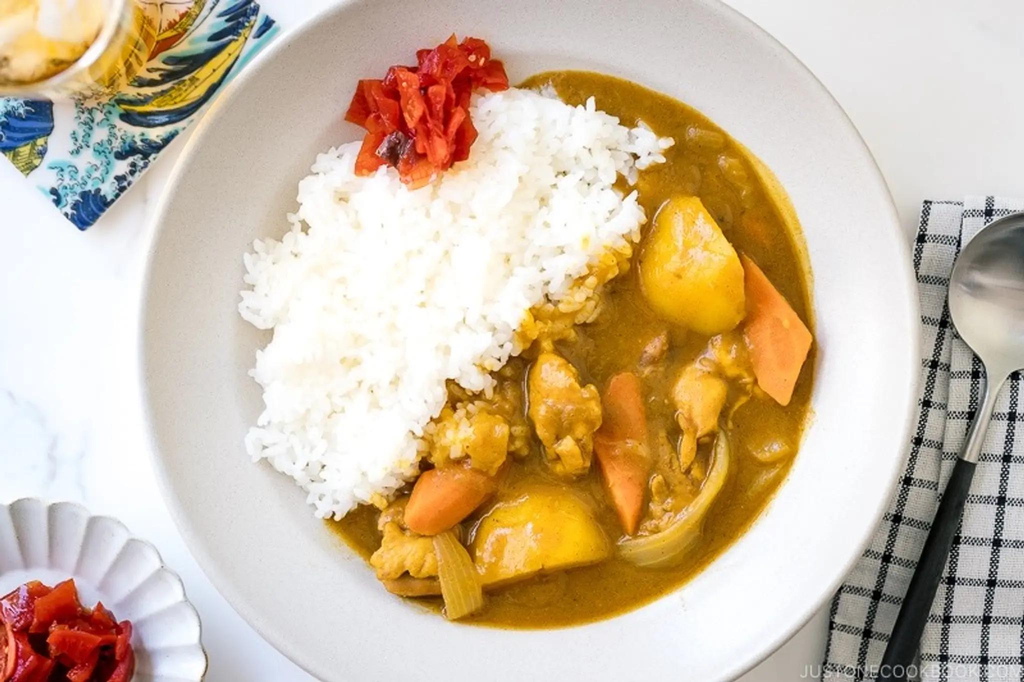
Place a generous serving of rice on one side of a plate.
Pour the hot chicken curry beside or over the rice.
Add chopped spring onions or your favourite Japanese pickles.
Your homemade Japanese Chicken Curry is ready to enjoy!
6. Popular Types of Japanese Curry
Japanese curry comes in many delicious varieties.
| Type | Main Ingredient | Description |
|---|---|---|
| Chicken Curry | Chicken | Mild and tender curry. |
| Beef Curry | Beef | Rich and hearty flavour. |
| Pork Curry | Pork | Popular everyday Japanese curry. |
| Vegetable Curry | Mixed vegetables | Meat-free option. |
| Seafood Curry | Shrimp or seafood | Light seafood flavour. |
| Katsu Curry | Breaded pork or chicken | Curry served with crispy cutlet. |
| Cheese Curry | Cheese | Creamy and rich variation. |
Chicken curry is particularly popular because chicken absorbs the seasoning beautifully and cooks relatively quickly.
7. Best Side Dishes to Serve with Japanese Chicken Curry
Japanese chicken curry is satisfying on its own, but traditional accompaniments can make the meal even better.
| Side Dish | Why It Pairs Well |
|---|---|
| Fuku-jinzuke | Sweet and tangy Japanese pickles. |
| Rakkyo | Crunchy pickled Japanese shallots. |
| Japanese Cabbage Salad | Adds freshness and crunch. |
| Miso Soup | Provides a comforting contrast. |
| Gyoza | Adds a delicious savoury side. |
| Green Salad | Balances the rich curry sauce. |
Fuku-jinzuke and rakkyo are particularly popular curry accompaniments in Japan.
8. Professional Tips for Delicious Japanese Chicken Curry
Want your homemade curry to taste like a Japanese restaurant version? Follow these tips:
- Use chicken thighs: They remain juicy and tender during simmering.
- Cook the onions properly: Soft, lightly caramelised onions add natural sweetness.
- Cut vegetables evenly: This helps everything cook at the same rate.
- Add roux after cooking the vegetables: This helps prevent the thick sauce from sticking to the pan.
- Use low heat after adding roux: Gentle simmering develops the flavour.
- Adjust the consistency: Add a little water if the curry becomes too thick.
- Allow the curry to rest: A short resting period can help the flavours combine.
Chef’s tip: Add a small amount of grated apple to introduce natural sweetness and a subtle fruity flavour.
9. A Little Story: A Comforting Dinner in Japan
Imagine returning home on a cold evening in Japan.
As you open the door, you notice the comforting aroma of onions, chicken, and curry spices coming from the kitchen.
A large saucepan is simmering gently on the stove. Inside, tender chicken, potatoes, and carrots are surrounded by a thick golden-brown sauce.
Soon, a plate of fluffy rice arrives with a generous serving of chicken curry.
You take the first spoonful and enjoy the gentle sweetness, rich savoury flavour, and warmth of the freshly prepared meal.
It is not a complicated restaurant dish. It is everyday Japanese comfort food, prepared with simple ingredients and enjoyed with family.
That is what makes Japanese chicken curry so special.
10. Frequently Asked Questions (FAQs)
Q1. Is Japanese chicken curry spicy?
Traditional Japanese chicken curry is usually mild, although medium-hot and hot versions are widely available.
Q2. What is Japanese curry roux?
Japanese curry roux is a mixture of flour, fats, spices, and seasonings that thickens the curry and gives it its distinctive flavour.
Q3. Can I make Japanese chicken curry without curry roux?
Yes. You can prepare it using flour, butter, curry powder, and other seasonings, although the flavour may differ from packaged Japanese curry roux.
Q4. Which chicken is best for Japanese curry?
Boneless chicken thighs are an excellent choice because they remain moist and tender. Chicken breast can also be used.
Q5. Can I make Japanese chicken curry in advance?
Yes. Japanese curry can be prepared ahead and refrigerated promptly. Reheat it thoroughly before serving.
Q6. Is Japanese chicken curry healthy?
It can provide protein, carbohydrates, and vegetables. However, nutritional value depends on portion sizes, roux ingredients, added fats, and salt content.
Q7. What rice is best for Japanese chicken curry?
Japanese short-grain white rice is the traditional choice because its soft, slightly sticky texture works well with thick curry sauce.
11. Final Thoughts
Japanese Chicken Curry チキンカレー is one of Japan’s most comforting and enjoyable everyday meals.
Its thick, mildly spiced sauce, tender chicken, soft vegetables, and fluffy rice create a satisfying combination that appeals to people of all ages.
Whether you prepare a classic homemade version, experiment with different vegetables, or serve it with crispy chicken katsu, Japanese curry offers endless opportunities to enjoy Japanese food culture.
Discover more Japanese recipes, traditional dishes, and authentic culinary guides at JapanFoodGuide.com.
Helpful Resources and Further Reading
- Just One Cookbook – Simple Chicken Curry
- Japan Guide – Japanese Curry
- House Foods – Japanese Curry
- Taste of Japan – Japanese Food and Recipes
- Kikkoman – Japanese Cooking and Recipes
This article is independently written for JapanFoodGuide.com. The recipe and explanations are presented in original wording, using general Japanese cooking techniques and the linked resources for additional learning.
Leave a Reply