

1. What Is Brown Rice Cooked in a Donabe?
Cooking brown rice in a Donabe (土鍋) is a traditional Japanese-inspired way of preparing rice using a special clay pot.
Unlike ordinary white rice, brown rice retains its outer bran layer and germ, giving it a slightly nutty flavour, chewy texture, and naturally rich appearance.
A Donabe is a Japanese earthenware cooking pot designed to distribute heat gently and retain warmth. It is widely used in Japanese kitchens for preparing rice, hot pots, soups, and other comforting dishes.
When brown rice is cooked properly in a Donabe, the grains become tender while maintaining their distinctive chewy texture.
The secret to delicious Donabe brown rice is patience: proper soaking, controlled heat, and allowing the rice to rest after cooking.
2. What Is a Japanese Donabe?
A Donabe is a traditional Japanese clay pot made from heat-resistant ceramic material.
It is commonly used for preparing one-pot meals, simmered dishes, hot pots, and freshly cooked rice.
Its thick walls help distribute heat evenly and retain warmth after cooking.
| Feature | Description |
|---|---|
| Japanese name | Donabe (土鍋) |
| Material | Heat-resistant clay or ceramic |
| Main use | Rice, hot pots, and simmered dishes |
| Heat distribution | Gentle and even |
| Heat retention | Excellent |
| Cooking style | Traditional Japanese cooking |
A rice-specific Donabe is particularly useful because its design supports consistent heat distribution and moisture retention.
Important: Not every Donabe is suitable for direct stovetop cooking. Always check the manufacturer’s instructions before using your pot.
3. Why Cook Brown Rice in a Donabe?
Cooking brown rice in a Donabe offers a different experience from using a standard saucepan or electric rice cooker.
| Feature | Brown Rice in a Donabe |
|---|---|
| Flavour | Naturally nutty |
| Texture | Chewy and tender |
| Cooking method | Traditional stovetop preparation |
| Heat control | Manual |
| Aroma | Rich and earthy |
| Serving style | Freshly cooked in a traditional pot |
The gentle cooking process helps the grains absorb water evenly.
It also creates an enjoyable traditional cooking experience, especially when preparing a Japanese-style meal at home.
4. Ingredients Needed to Cook Brown Rice in a Donabe
This basic recipe makes approximately four servings.
A. Main Ingredients
| Ingredient | Quantity |
|---|---|
| Japanese short-grain brown rice | 300 g |
| Water | Approximately 450–500 ml |
| Salt | A small pinch (optional) |
The exact amount of water depends on the rice variety, soaking time, and Donabe design.
B. Optional Ingredients
- Kombu seaweed for extra umami.
- Toasted sesame seeds.
- Chopped green onions.
- A small amount of olive oil.
- Japanese pickled vegetables for serving.
Ingredient tip: Japanese short-grain brown rice is an excellent choice because it becomes pleasantly chewy and slightly sticky when cooked.
5. How to Cook Brown Rice in a Donabe Step by Step
Step 1: Measure the Brown Rice
Measure the desired quantity of brown rice using a kitchen scale or measuring cup.
Place the rice in a large bowl.
Step 2: Wash the Rice
Add clean water to the bowl.
Gently rub the grains together using your hands.
Drain the cloudy water and repeat the process until the water becomes relatively clear.
Avoid rubbing too aggressively because this can damage the grains.
Step 3: Soak the Rice
Transfer the washed rice into a bowl and cover it with plenty of clean water.
Allow it to soak for approximately 6–8 hours or overnight.
Brown rice has a tougher outer bran layer than white rice, so soaking helps the grains absorb water and cook more evenly.
For food safety, soak the rice in the refrigerator if soaking for an extended period.
Step 4: Drain the Rice
After soaking, drain the rice thoroughly using a fine-mesh strainer.
Allow excess water to drain before transferring the grains into the Donabe.
Step 5: Add Water to the Donabe
Place the drained brown rice into the Donabe.
Add approximately 450–500 ml of fresh water for 300 g of rice as a starting point.
Adjust the quantity according to your rice variety and the manufacturer’s recommendations.
Step 6: Begin Cooking
Place the Donabe on the stovetop.
Start with medium heat and gradually bring the water to a boil.
Once boiling, reduce the heat to low.
Step 7: Simmer the Rice
Cover the Donabe with its lid.
Cook gently for approximately 35–45 minutes, depending on the pot and rice variety.
Avoid opening the lid repeatedly because escaping steam can affect the cooking process.
Step 8: Turn Off the Heat
Once the rice has absorbed most of the water and become tender, turn off the heat.
Leave the lid closed.
Allow the rice to rest for approximately 15–20 minutes.
This resting period helps distribute moisture throughout the grains.
Step 9: Fluff the Rice
Open the lid carefully, keeping your face away from escaping steam.
Use a rice paddle or wooden spoon to gently fluff the grains.
Avoid crushing the rice.
Step 10: Serve Fresh
Transfer the brown rice into individual Japanese rice bowls.
Serve with miso soup, grilled fish, vegetables, or your favourite Japanese side dishes.
Your homemade Japanese Donabe brown rice is ready to enjoy!
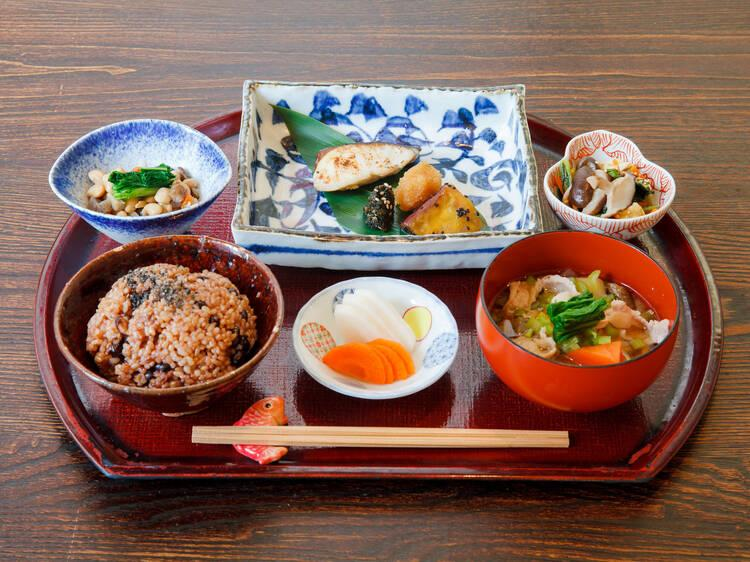
6. Popular Ways to Enjoy Japanese Brown Rice
Brown rice is versatile and can be served in several traditional and modern Japanese dishes.
| Dish | Description |
|---|---|
| Brown Rice with Miso Soup | A simple and comforting Japanese meal. |
| Brown Rice Onigiri | Rice balls made with cooked brown rice. |
| Brown Rice with Grilled Fish | A balanced Japanese-style dinner. |
| Vegetable Brown Rice Bowl | Served with seasonal vegetables. |
| Brown Rice with Japanese Curry | A hearty alternative to white rice. |
| Sesame Brown Rice | Tossed with toasted sesame seeds. |
You can also add furikake, pickled vegetables, or roasted seaweed for additional flavour.
7. Professional Tips for Perfect Donabe Brown Rice
Follow these techniques to achieve delicious, evenly cooked brown rice.
- Choose quality rice: Japanese short-grain brown rice provides excellent texture.
- Wash thoroughly: Remove excess surface starch and impurities.
- Soak sufficiently: Brown rice needs more hydration than white rice.
- Measure water carefully: The correct water ratio is essential.
- Control the heat: Avoid excessive heat after the rice begins boiling.
- Keep the lid closed: Steam is important for even cooking.
- Allow resting time: Resting improves the final texture.
- Fluff gently: Separate the grains without crushing them.
Chef’s tip: Every Donabe and brown rice variety behaves differently. Start with the manufacturer’s recommended water ratio and cooking instructions, then adjust gradually after testing.
8. Common Mistakes to Avoid
| Mistake | Result | Solution |
|---|---|---|
| Skipping soaking | Hard or unevenly cooked grains | Soak the rice sufficiently. |
| Using too little water | Dry and firm rice | Adjust water according to the rice variety. |
| Cooking over high heat | Rice may scorch at the bottom | Reduce heat after boiling. |
| Opening the lid repeatedly | Steam escapes | Keep the lid closed during cooking. |
| Skipping resting time | Uneven moisture distribution | Rest for 15–20 minutes. |
| Using an unsuitable pot | Risk of cracking or damage | Follow the Donabe manufacturer’s instructions. |
9. How to Store Cooked Brown Rice
Freshly cooked brown rice tastes best immediately, but leftovers can be stored safely.
| Storage Method | Recommendation |
|---|---|
| Room temperature | Avoid leaving cooked rice out for extended periods. |
| Refrigerator | Cool promptly and refrigerate at 4°C (40°F) or below. |
| Best quality | Consume refrigerated rice within 1 day. |
| Freezer | Freeze promptly in individual portions for best quality. |
| Reheating | Reheat until steaming hot throughout. |
Cooked rice can develop harmful bacteria if left at room temperature for too long.
Cool it quickly, refrigerate promptly, and avoid leaving it sitting in the Donabe after cooking.
For better texture, divide the rice into individual portions before freezing.
10. A Little Story: A Traditional Japanese Rice Meal
Imagine sitting in a traditional Japanese home on a peaceful evening.
A Donabe rests on the kitchen counter, still holding freshly cooked brown rice.
When the lid is lifted, warm steam rises, carrying the gentle nutty aroma of the grains.
The rice looks slightly glossy, with each grain retaining its natural shape.
At the dining table, a bowl of brown rice is served beside grilled fish, miso soup, and seasonal vegetables.
You take your first bite.
The rice is pleasantly chewy, slightly sweet, and full of natural flavour.
It is a simple meal, but the traditional preparation makes it feel special.
That is the charm of cooking rice in a Donabe: an everyday ingredient becomes part of a meaningful Japanese dining experience.
11. Frequently Asked Questions (FAQs)
Q1. What does Donabe mean in Japanese?
Donabe (土鍋) means earthenware pot. It refers to a traditional Japanese clay cooking vessel.
Q2. Can I cook brown rice in an ordinary Donabe?
Some Donabe pots are suitable, but not all are designed for rice cooking or direct stovetop heat. Always check the manufacturer’s instructions.
Q3. Why does brown rice need longer soaking than white rice?
Brown rice retains its outer bran layer, which makes water absorption slower. Soaking helps soften the grains and improve cooking consistency.
Q4. How long should I soak brown rice?
Approximately 6–8 hours or overnight is a useful starting point. Refrigerate the rice during extended soaking.
Q5. Can I cook brown rice without soaking it?
Yes, but it may require additional water and longer cooking. The texture may also be less consistent.
Q6. Why is my Donabe brown rice still hard?
It may need more soaking, additional water, or a longer cooking period. Different rice varieties require different cooking adjustments.
Q7. Can I use long-grain brown rice instead of Japanese short-grain rice?
Yes. However, long-grain rice produces a different texture and may require a different water ratio and cooking time.
Q8. Is brown rice healthier than white rice?
Brown rice generally contains more fibre and retains more of the grain’s natural nutrients because its bran and germ remain intact. Both varieties can be part of a balanced diet.
12. Final Thoughts
Cooking Brown Rice in a Donabe (玄米の炊き方) is a wonderful way to explore traditional Japanese cooking techniques.
The combination of quality brown rice, careful soaking, controlled heat, and proper resting creates a delicious dish with a naturally nutty flavour and satisfying texture.
Whether served with grilled fish, miso soup, vegetables, or Japanese curry, Donabe brown rice makes an excellent addition to everyday meals.
Try this traditional cooking method at home and experience the comforting flavour of freshly prepared Japanese brown rice.
Explore more authentic Japanese recipes, traditional dishes, and culinary guides at JapanFoodGuide.com.
Helpful Resources and Further Reading
- Just One Cookbook – How to Cook Brown Rice in a Donabe
- Kikkoman – Japanese Recipes and Cooking Ideas
- Taste of Japan – Japanese Food and Recipes
- Japan National Tourism Organization – Japanese Food Culture
- Japan Guide – Japanese Cuisine
This article is independently written for JapanFoodGuide.com. The explanations and cooking instructions use original wording, with the supplied recipe provided as inspiration and for further culinary learning.
Leave a Reply